Tank & Silo Painting in Irving, TX
Specialized coatings for storage tanks and silos.
Technical
Specifications.
Commercial Painting Contractors Irving provides specialized tank and silo painting services for industrial storage vessels, process tanks, water towers, and silo structures throughout Irving's manufacturing and utility infrastructure. Our confined-space certified coating teams deliver comprehensive protective systems for carbon steel tanks, stainless vessels, fiberglass tanks, and concrete silos requiring both interior and exterior corrosion protection. We understand that tank coatings are critical protective systems—preventing product contamination, structural corrosion, and environmental releases while maintaining compliance with regulatory requirements. Serving Irving's industrial facilities, water utilities, food processing plants, chemical storage operations, and agricultural installations, we provide complete tank coating solutions from surface preparation through final protective application using certified coating systems appropriate for specific service conditions and stored materials.
Interior tank coating for product contact surfaces
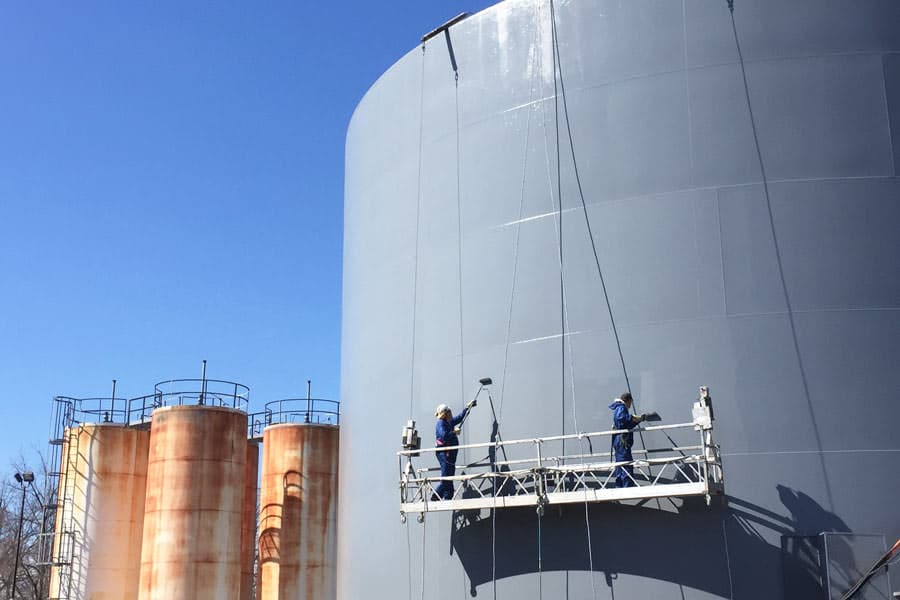
Exterior tank painting for weather and UV protection
Confined space certified crews and safety protocols
Abrasive blasting for complete rust removal
NSF-61 certified coatings for potable water tanks
Chemical-resistant linings for process vessels
High-solids coating systems minimizing VOC emissions
Complete documentation and material certifications
Irving
Context.
Based in Irving, we serve the industrial storage infrastructure throughout manufacturing districts along Interstate 635, utility water towers and storage tanks, food processing facilities requiring sanitary coatings, chemical storage at industrial sites, and agricultural operations throughout the greater Irving area. Our confined-space certified teams navigate the safety complexities of tank work—implementing atmospheric testing, ventilation systems, rescue protocols, and regulatory compliance ensuring safe tank coating execution.
Specify Your Project
Strategic
Advantages.
Extended tank lifespan through superior corrosion protection systems
Prevented product contamination with appropriate food-grade or potable water coatings
Maintained regulatory compliance for environmental and health requirements
Eliminated costly tank replacement through protective coating restoration
Enhanced safety through proper surface preparation and certified application
Protected stored product integrity with compatible coating systems
Long-term cost savings via preventive protection versus reactive replacement
Our Proven
Process.
Tank assessment evaluating substrate condition, service environment, and coating requirements
Confined space entry permitting and comprehensive safety protocol implementation
Complete tank cleaning and abrasive blasting removing rust and contaminants
Surface preparation to SSPC or NACE standards based on coating specifications
Multi-coat primer and lining systems achieving specified dry film thickness
Exterior coating providing weather protection and aesthetic finish
Quality verification, atmospheric testing, and comprehensive project documentation
Frequently Asked
Questions.
What safety protocols are required for tank painting?
Tank work demands rigorous safety compliance. Requirements include confined space entry permits with atmospheric testing, continuous ventilation systems preventing hazardous atmospheres, rescue equipment and trained standby personnel, fall protection for work at heights, appropriate respiratory protection, explosion-proof equipment in flammable atmospheres, and comprehensive safety training for all personnel. All our tank crews maintain confined space certification and follow strict OSHA protocols. Safety is never compromised on tank projects.
Can you coat tanks that store food products or potable water?
Yes, using appropriate certified coatings. Potable water tanks require NSF-61 certified coatings approved for drinking water contact. Food processing tanks need FDA-compliant coatings meeting food safety requirements. These specialized systems undergo rigorous testing ensuring no harmful compounds leach into products. We provide complete material certifications and documentation supporting health department or regulatory approval. Product safety is paramount—we only use properly certified coatings for human consumption applications.
How often should industrial tanks be recoated?
Interior tank coatings typically last 10-20 years depending on stored material, temperature, and coating system. Water tanks with quality epoxy linings often achieve 15-20 years. Chemical tanks with aggressive product exposure may require recoating every 7-12 years. Exterior tank coatings typically need attention every 10-15 years based on weather exposure. Regular inspection every 3-5 years identifies coating degradation before substrate damage or product contamination occurs allowing proactive maintenance.
What surface preparation is required for tank coating?
Tank coating demands thorough preparation for lasting adhesion. Interior tanks typically receive abrasive blasting to SSPC-SP 10 (near-white metal) or SP 6 (commercial blast) removing all rust, scale, and contaminants. Exterior tanks use similar preparation levels based on coating requirements. Chemical cleaning removes oils and process residues. Proper surface profile is verified using comparators. Inadequate preparation is primary cause of tank coating failure—we never compromise on preparation standards regardless of pressure for rapid turnaround.
Can you coat tanks without complete shutdown for long periods?
Sometimes. For tanks that can be temporarily emptied, we complete interior coating during planned outages then return to service after proper cure. Exterior coating proceeds without product removal. For critical tanks requiring continuous service, we coordinate phased interior coating of tanks in battery systems allowing process continuity. Some operations maintain spare capacity enabling tank rotation through coating cycles. We work with operations teams developing strategies minimizing production impact while achieving necessary coating protection.
What coating systems resist chemical exposure in process tanks?
Chemical resistance depends on specific chemicals, concentrations, and temperatures. Common systems include epoxy linings providing broad chemical resistance including acids, alkalis, and solvents, polyurethane coatings for abrasion resistance and chemical exposure, vinyl ester for extremely aggressive chemicals, and specialized systems like phenolic or novolac epoxies for severe service. Manufacturer chemical resistance guides specify appropriate systems. We consult with coating technical representatives ensuring optimal system selection for your specific stored materials and process conditions.
Project Lifecycle
Typical deployment timeline for Irving facilities.
Evaluation
Day 1-2Substrate analysis and detailed specification development.
Mobilization
Day 3-5Site protection, equipment setup, and material procurement.
Execution
VariesMulti-layered coating application with phased deployment.
Validation
Final DayQuality audit, walk-through, and site demobilization.
Evaluate
Your Asset.
Whether you possess a single corporate unit or an entire industrial complex, our professional team is prepared to develop your project specifications.